
How to Read Chinese Manhua in English Without Waiting for Translations

You found a manhua you love. The cover art is gorgeous, the cultivation plot has 800 chapters of build-up, and the official English release stopped 200 chapters ago. Or never started. The raw version updates every week on a Chinese site you can’t read.
This is the normal experience for Chinese manhua readers in 2026. The catalogue is massive and the translation pipeline is tiny, so most of what’s actually being published in China will never get an English version.
Here’s where the official options sit, why the gap is so big, and what you can do about it today.
Where can you read Chinese manhua in English officially?
A handful of platforms publish licensed manhua in English:
- INKR: hosts Kuaikan and a rotating catalogue of licensed manhua and webtoons.
- MangaToon: broader Asian comics platform with a strong manhua section.
- WebComics and Tappytoon: smaller catalogues, some manhua mixed in with manhwa.
Start here. If your series is on one of these, you’re done. Read it legally and support the author.
The problem is what isn’t there.
Why most Chinese manhua never gets translated
China publishes more comic chapters per week than any English company can keep up with. Kuaikan alone gets over 10 million monthly visitors and runs thousands of original titles. Tencent Comics (ac.qq.com) has a catalogue measured in tens of thousands of series. Bilibili Comics, once the biggest licensed English platform, shut down its international app in February 2024, and most of the catalogue sits permanently in Chinese.
Even when a series does get licensed, the gap between the Chinese release and the English chapter is usually months. Translation isn’t the slow part. Licensing, lettering, quality review, and platform scheduling are. By the time chapter 400 hits English, chapter 600 is already out in Chinese.
The publishers know the backlog is unclearable by hand, and they’re moving on it. Japan’s trade ministry is reportedly preparing around $71 million in subsidies to get Shueisha, Kodansha, Square Enix and Crunchyroll translating with AI, which we broke down in Japan’s government is backing AI manga translation. That’s Japan, not China, but the arithmetic is identical: too many chapters for too few translators, and machine translation is the only thing that scales. Chinese manhua just doesn’t have a government cheque behind it.
So if you’re reading something off the beaten path, like a niche xianxia, a BL manhua that hasn’t been licensed, or a long-running cultivation epic the publishers skipped, you’re stuck with the raws.
How to read raw manhua on Chinese sites
The major raw sources, all free, all in Chinese:
- Kuaikan Manhua (kuaikanmanhua.com): modern, mobile-first, lots of shoujo and romance (see how to read Kuaikan Manhua in English for the sign-up and pricing details)
- Tencent Comics / AC.QQ (ac.qq.com): biggest catalogue, action and fantasy heavy (see how to read Tencent Comics in English for the WeChat login route and pricing)
- Bilibili Manhua (manga.bilibili.com): the full Chinese library behind Bilibili’s former English service
- Manhuagui: aggregator-style, useful for older or obscure titles
You can sign up for most of these with an email. Some titles are locked behind a Chinese phone number, but most aren’t.
Then comes the actual problem. You can see the art. You can’t read the words.
Translating Chinese manhua yourself
The free way is to screenshot a panel and run it through Google Translate or Google Lens. It works for a panel or a page. It gets slow at chapter length, and Chinese is harder than most languages for these tools because of stylised fonts, dense bubbles and a writing system with no spaces between words.
Tools that translate the page in place save you the screenshots. We make one, Madomi, a browser extension and phone app. You open the chapter on Kuaikan, Tencent or another manhua site, and the English is drawn over the Chinese as you scroll.
Machine translation is not the same as a polished scanlation. A human translator handles cultivation terms, sect names and wordplay better than any AI. For keeping up with a series you would otherwise drop, it is good enough.
There is a longer walkthrough in our guide to translating Chinese manhua to English. The same approach works for Korean comics, which we covered in how to read Korean manhwa without knowing a single word of Korean.
Read more on Pawaka Blog
Keep reading
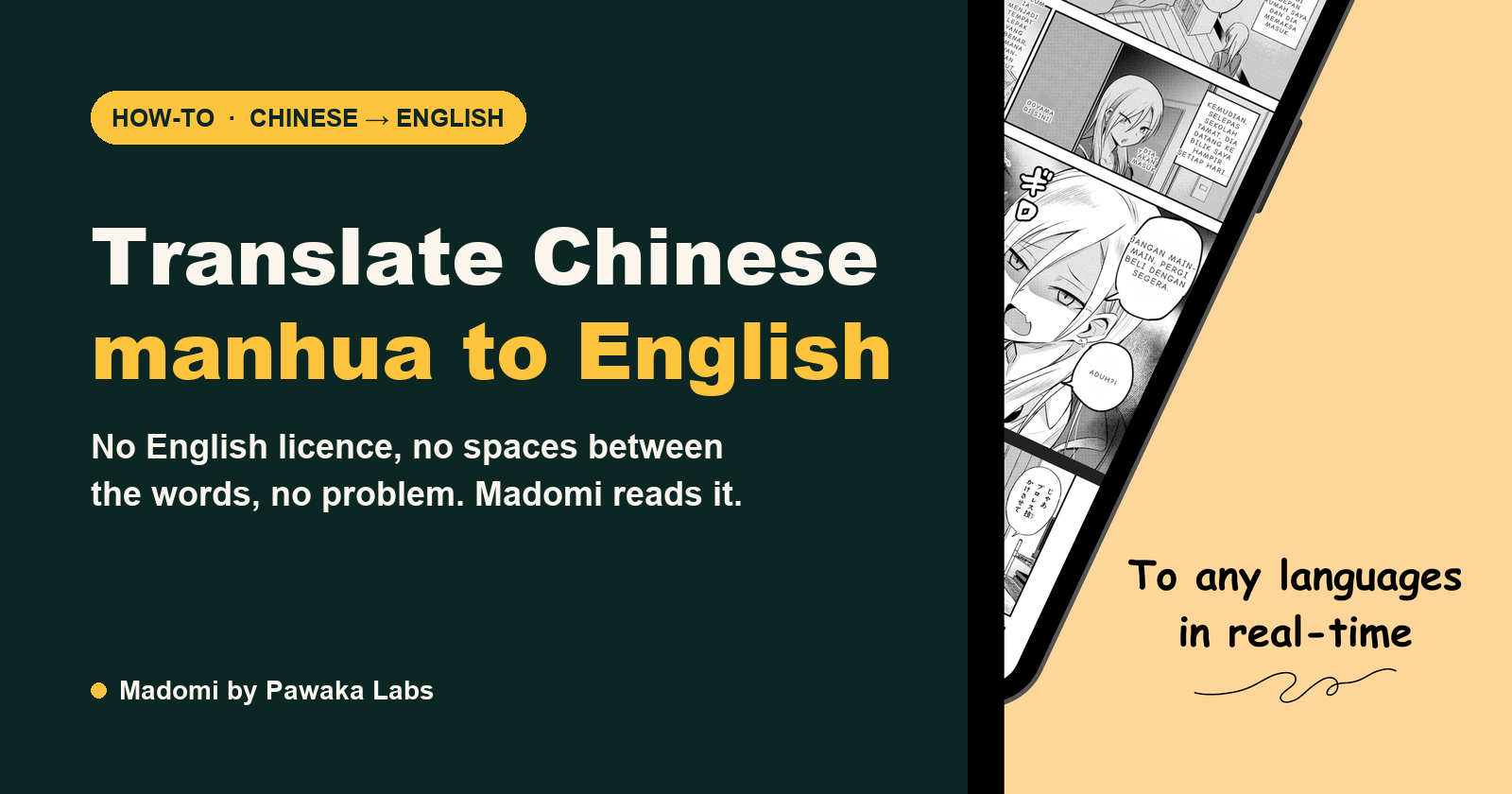
How to Translate Chinese Manhua to English (No Chinese Needed, No Licence Required)
How to translate Chinese manhua to English: where to read raw chapters legally, the free Google Lens method, and how to keep names and cultivation terms consistent.
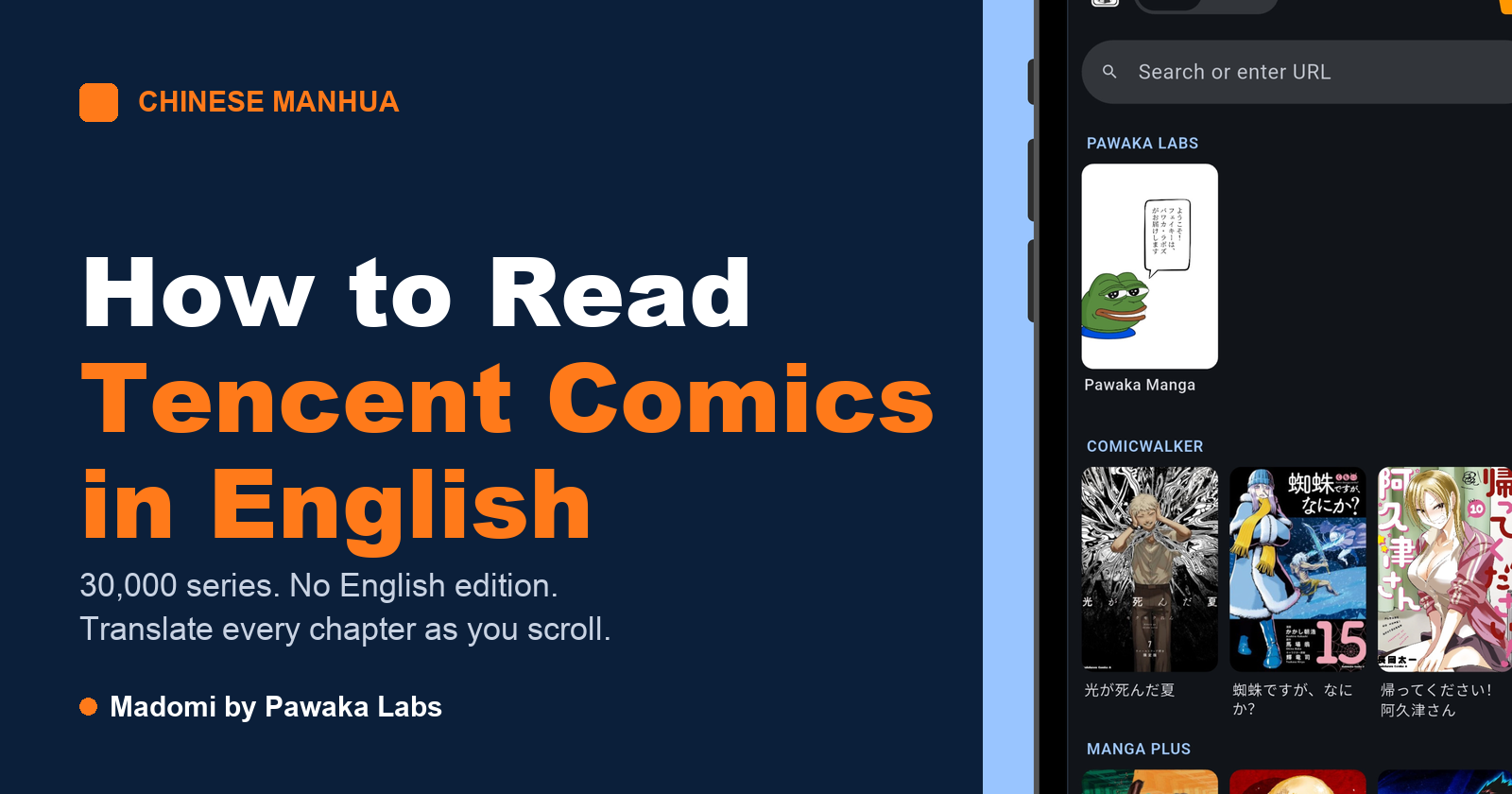
How to Read Tencent Comics in English
Tencent Comics (ac.qq.com) has 30,000 manhua and no English edition. How the free and paid chapters work, how to log in from abroad, and the ways to read in English.
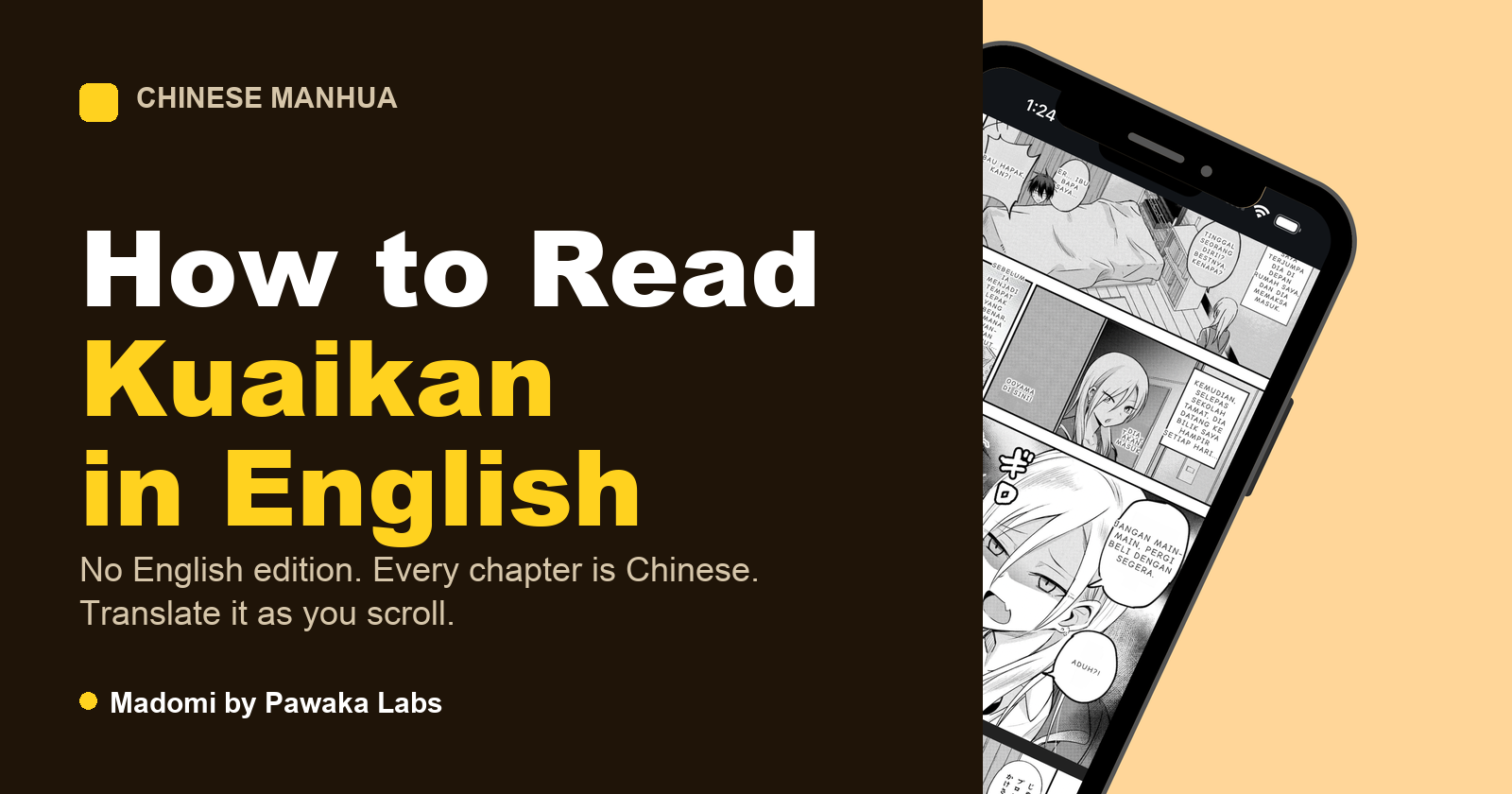
How to Read Kuaikan Manhua in English
Kuaikan Manhua has no English edition. Here is how the free and KK coin chapters work, how to sign up from outside China, and the ways to read chapters in English.

Witch Hat Atelier: How to Read the Manga Ahead of the Anime
The Witch Hat Atelier anime only covers the first few volumes. Here's how to read the rest of the manga, including the latest chapters straight from Japan.
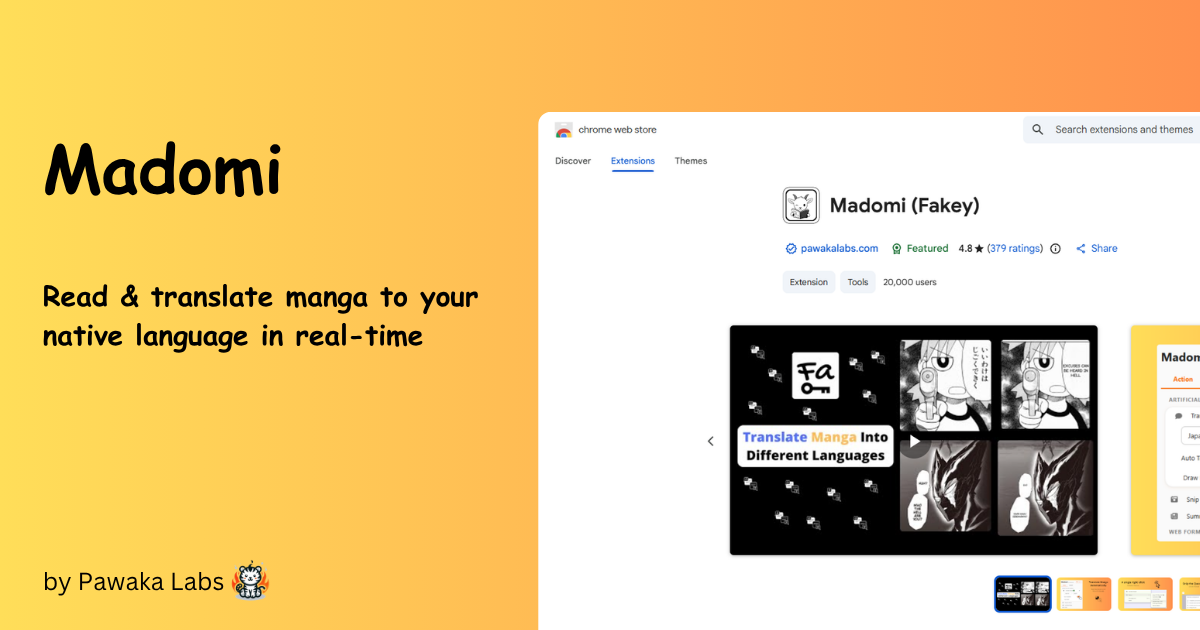
Fakey is becoming Madomi, our new manga reader
Fakey is changing its name to Madomi, a full manga reader and translator where you browse, read and translate manga, manhwa and manhua in one app.