Blue Lock and the Argentina Controversy: What the Manga Actually Shows
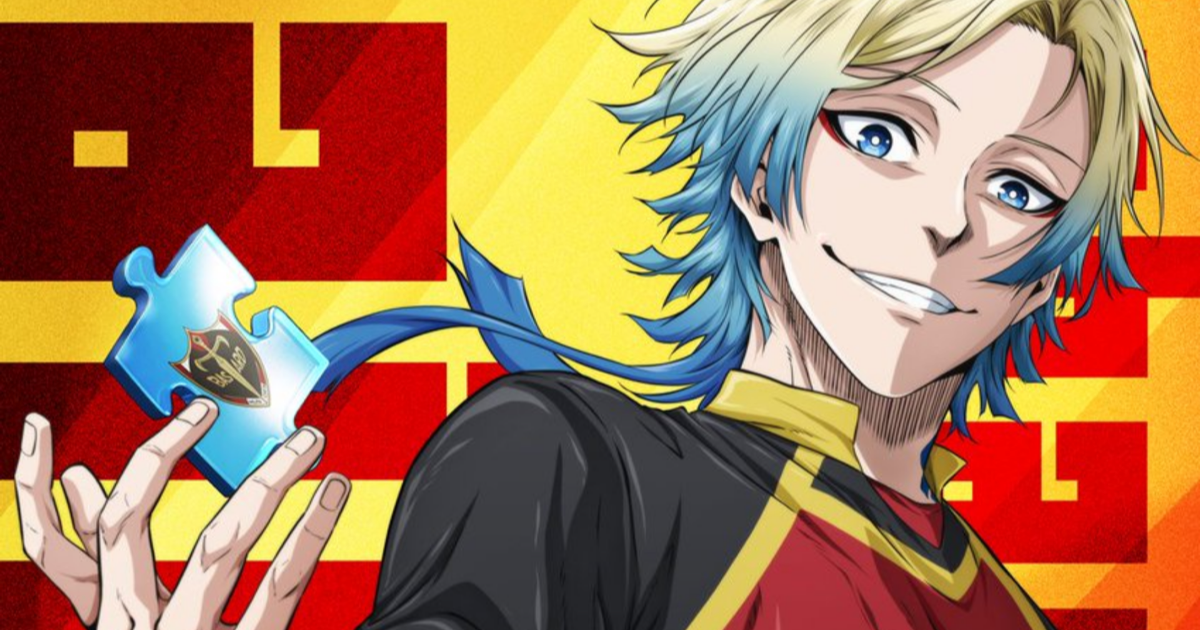
If you’ve been anywhere near football anime this year, you’ve probably run into the Blue Lock Argentina controversy: the strange, spiky argument about a Japanese soccer manga that somehow ended up being about Argentine football values. It’s a fun one, because it isn’t really a scandal in the usual sense. Nobody got cancelled. It’s a clash of philosophies, and Argentina happens to be the country that takes those philosophies most personally.
Here’s what’s actually going on, why it lands so hard in Argentina specifically, and where in the story the interesting part lives (spoiler: the anime hasn’t gotten there yet).
So what is the Blue Lock Argentina controversy?
Blue Lock’s whole pitch is ego. The premise is that Japan keeps losing on the world stage because its players are too polite and too willing to pass instead of shoot. So a mad-scientist coach locks 300 strikers in a facility and tells them to become selfish monsters who devour each other to survive. Individual desire over the collective. That’s the thesis, stated out loud, over and over.
When the anime and the Nagi movie rolled out in Argentina, local outlets didn’t treat that as a neutral sports story. One ran it under the headline “¿Fútbol libertario?” and flatly called it “la polémica serie animada Blue Lock.” The reading was that the series preaches radical individualism dressed up as a training method, and that this “ego is everything” gospel maps a little too neatly onto a certain political moment. Agree with that or not, that framing is the controversy: a football story that argues the collective is a weakness, landing in a country where the collective is basically sacred.
Why it hits a nerve in Argentina specifically
You could drop Blue Lock’s ego sermon into a dozen countries and get a shrug. In Argentina it pokes a bruise, and the timing is why. (For the flip side of the same fight, see how the manga sets its ego gospel against Spain and tiki-taka.)
Argentina won the 2022 World Cup on exactly the thing Blue Lock spends 350 chapters trying to burn down: a team that played for each other, carried by Messi but defined by the group around him. The national football identity there is built on “la nuestra,” an improvised and deeply communal idea of the game. A generation of kids grew up on Supercampeones (that’s Captain Tsubasa in Latin America), where the moral of every arc is that friendship and teamwork win.
Blue Lock walks in and says the quiet part loud: none of that makes you the best striker in the world, only your own hunger does. To a lot of Argentine fans that reads as an insult to how they understand football at a cultural level, rather than an edgy take. That’s the real engine of the debate. Nobody is offended by a single scene. The series is arguing against the exact values that just won Argentina a World Cup.
Pablo Cavasoz: the Argentine the manga puts in the crosshairs
The controversy also has a face inside the story, and his name is Pablo Cavasoz.
Cavasoz is Blue Lock’s Argentine character: a pro on the Argentina national team, freckled and baby-faced, hyped as the best free-kick specialist on the planet. He shows up as part of a squad of world-class foreign professionals brought in to measure the Blue Lock kids against real senior talent. On paper he’s the closest thing the manga has to a stand-in for Argentina’s footballing pedigree.
What happens to that pedigree when it meets a facility full of teenage egoists is the whole point of the sequence, and it’s the kind of matchup that gets Argentine fans arguing all over again. We’ll leave the result unspoiled. The thing worth knowing is that this stretch is not in the anime. Not close.
The catch: the anime is nowhere near this
If you’re watching the anime and waiting to see the ego philosophy fully cash out, or waiting on the Cavasoz matchup, you’re going to be waiting for years.
Season 3 lands on October 9, 2026 and adapts the Neo Egoist League, starting from chapter 152. As of mid-2026 the manga is past chapter 350, with 39 collected volumes out. That’s roughly 200 chapters of story sitting ahead of where Season 3 even begins, and Blue Lock adapts only about 10 to 12 chapters per season. The parts of the story that make the Argentina argument most heated live well past the anime’s current reach. We mapped the exact anime-to-manga jumping-on point in our guide to reading Blue Lock ahead of Season 3.
How to read the parts the anime hasn’t reached
For Blue Lock itself, if you’re in the US, the easy answer is K MANGA, Kodansha’s own app. Chapters go up in English basically the same day they release in Japan, it’s legal, and it pays the creator. Read it there.
Where a translator earns its keep is everything K MANGA doesn’t cover. If this whole debate has you wanting to go deeper (raw Japanese chapters of series that never got a same-day English release, or the mountains of Korean and Chinese sports titles that never get any official English at all), that’s the language wall doing its thing. Madomi translates the page in place, right on top of the original art, so you read as you scroll instead of hunting for a scanlation that may never come. It’s a browser extension and a mobile app, and the free plan is enough to point it at whatever you’re stuck on right now. If you want to branch out from Blue Lock, we’ve got walkthroughs for reading Korean manhwa and Chinese manhua without knowing the language.
The controversy is a great excuse to actually read the thing everyone’s arguing about. Start where the anime stops and see whether Blue Lock’s ego gospel holds up against the country that just proved teamwork wins.
FAQ
What is the Blue Lock Argentina controversy? It’s a culture-clash debate, not a scandal. Blue Lock argues that selfish, ego-driven play is what makes a great striker, which cuts directly against Argentina’s collective, team-first football identity. Argentine outlets covered the anime as “polémica” and framed its individualism as ideological.
Did Blue Lock insult Argentina? Not with a specific scene aimed at the country. The friction is philosophical: the series treats the collective as a weakness to overcome, and that reads as an insult to fans of a footballing culture built on teamwork, the same culture that won the 2022 World Cup.
Who is Pablo Cavasoz? Blue Lock’s Argentine character, a pro on the Argentina national team billed as the world’s best free-kick taker. He appears as part of a squad of elite foreign professionals brought in to test the Blue Lock players, later in the manga than the anime has reached.
Is the Cavasoz match in the anime? No. Season 3 starts at chapter 152 (the Neo Egoist League) and the manga is past chapter 350, so the stretches that fuel the Argentina debate are well ahead of the anime.
Where can I read Blue Lock ahead of the anime? K MANGA (Kodansha’s app, same-day English in the US and many countries) and Kodansha’s print and digital volumes. For raws and unlicensed series that never get an English release, a real-time translator like Madomi reads them in place.
Read more on Pawaka Blog
Keep reading
Demon Slayer: Infinity Castle Part 2 Still Has No Release Date. Here Is How to Read the Rest of the Story Now
Infinity Castle Part 2 has no release date and 2027 is the earliest realistic window. Part 1 ended at chapter 157, so here's where to pick up the manga.
The Summer Hikaru Died Manga Ends October 20. Here Is How to Read the Ending Before Season 2
The Summer Hikaru Died manga ends with chapter 51 on October 20, 2026. Here's where the anime left off and how to read the final chapters in your language.
The Apothecary Diaries Season 3 Premieres October 2. Here Is How to Read Ahead of It Today
The Apothecary Diaries Season 3 premieres October 2, 2026. Here's exactly where the anime leaves off, and how to read the light novel and manga ahead of it.
Blue Lock: How to Read the Manga Ahead of Season 3 (Neo Egoist League)
Blue Lock Season 3 adapts the Neo Egoist League. Here's exactly where the anime leaves off in the manga, where to read Blue Lock in English, and how far ahead the story is.
Blue Lock and Spain: Tiki-Taka, Sae Itoshi, and What the Manga Actually Shows
Blue Lock and Spain, explained: how the manga pits its ego gospel against tiki-taka, why it sends Sae Itoshi to Real Madrid, and where the anime hasn't reached.