What Is Ninku? The 1993 Manga Behind Naruto × Ninku, and How to Read It (It Was Never Translated)
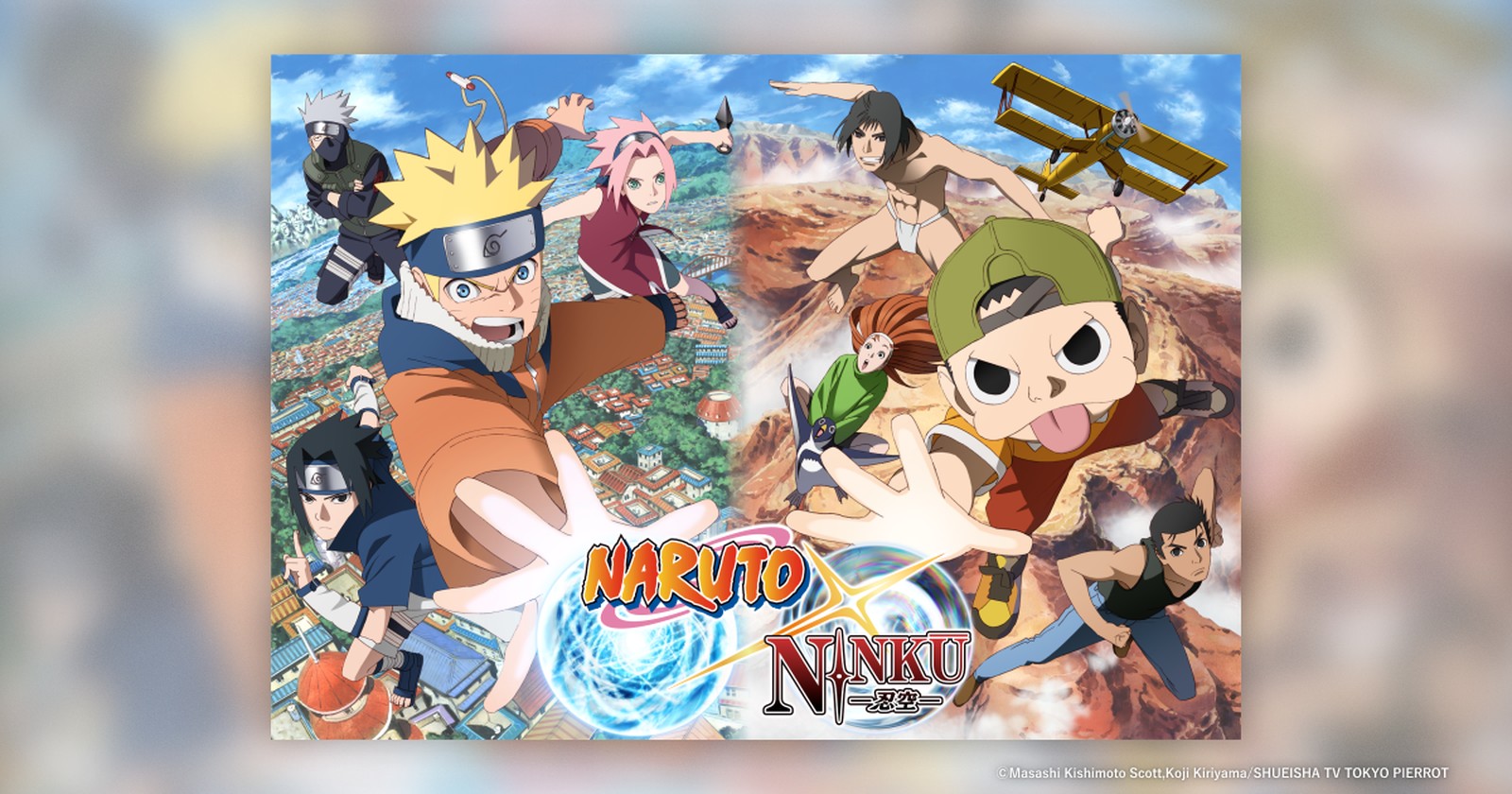
Ninku is a 1993 Weekly Shonen Jump manga by Koji Kiriyama about a 12-year-old ninja named Fusuke, and Masashi Kishimoto has said that without it, Naruto would not exist. It ran 9 volumes, got a 55-episode anime in 1995, and has never been released in English: not the manga, not the show. With a four-episode Naruto × Ninku crossover anime now announced, here’s what the series is, why Kishimoto owes it so much, and how to read it anyway. Last checked on 22 October 2026.
When the Naruto × Ninku card went up at New York Comic Con on 10 October, the reaction in the room was split between people who shouted and people who looked it up. Outside Japan, most fans were in the second group, and the lookup didn’t help much, because there’s almost nothing about Ninku in English. There’s a reason for that, and it’s the same reason the crossover is such a strange, lovely idea.
What Ninku is
Ninku (忍空, “ninja sky”) ran in Weekly Shonen Jump from June 1993 to September 1995, 80 chapters in two stretches, collected in nine volumes. Its author is Koji Kiriyama.
The setting is a world just after a war. The Ninku were an army of ninja whose fighting style mixed ninjutsu with kung fu, organised into twelve corps named for the animals of the Chinese zodiac, each corps led by a captain with a power drawn from an element and a dragon. They fought an empire, lost, and were disbanded by their own master before the end; the survivors are now blamed for the war and hunted.
Fusuke is twelve, was the captain of the First Corps, the Rat division, and controls wind. Three years after the war he’s wandering the country with a penguin called Hiroyuki, looking for the other captains. He finds Aicho, the Rooster captain, who fights with his legs and doesn’t think much of women, and Toji, the Snake captain, who fights with the earth and owns a small aircraft. The villains are the Imperial Army and its high priest Kochin, a feng shui master who beat the Ninku’s own master in a duel and wants the power of the Sky Dragon, the source of all twelve elements.
It’s a shonen adventure of its era: episodic, physical, funny, with a hero who is small, loud, grinning and far stronger than anyone expects. If that description sounds familiar, hold the thought.
Why Kishimoto says Naruto wouldn’t exist without it
Kishimoto was in his late teens when Ninku was running. He has said in interviews that he used to copy Kiriyama’s drawings while he was learning to draw, and that one reason he started Naruto at all was that he wanted to see Ninku continue. At the New York panel he put it in one line, quoted on the official site’s roundup: “Without Ninku, Naruto wouldn’t exist.”
Look at Fusuke next to the first chapter of Naruto and you don’t need the interview. A short ninja kid with a wind-based power, a grin that takes up half his face, an animal companion, a found family of fellow outcasts, and a world that blames him for something that happened before he could choose. The resemblance isn’t a secret; Kishimoto has been saying so for twenty years. The crossover is the first time the two have met on screen.
The anime connection runs through Pierrot. Studio Pierrot made the 55-episode Ninku series in 1995 and 1996 for Fuji TV, directed by Noriyuki Abe, who also directed Yu Yu Hakusho and, later, Bleach. Seven years later Pierrot made Naruto. The crossover’s director is Noriyuki Abe, with Tetsuya Nishio on character design, which is the Naruto anime’s own designer drawing Kiriyama’s characters.
What Naruto × Ninku is
The crossover is a four-episode anime, supervised by Kishimoto and Kiriyama together. The premise given at the panel: Team 7 gets lost in another world and meets a frog-faced boy called Fusuke. That’s all that’s been said. No air date, no streaming partner, no episode titles; the Project Rasengan roadmap places it inside a 2027 to 2029 window as a “new TV anime limited series”, and Jump Festa on 19 and 20 December is the stated venue for the details.
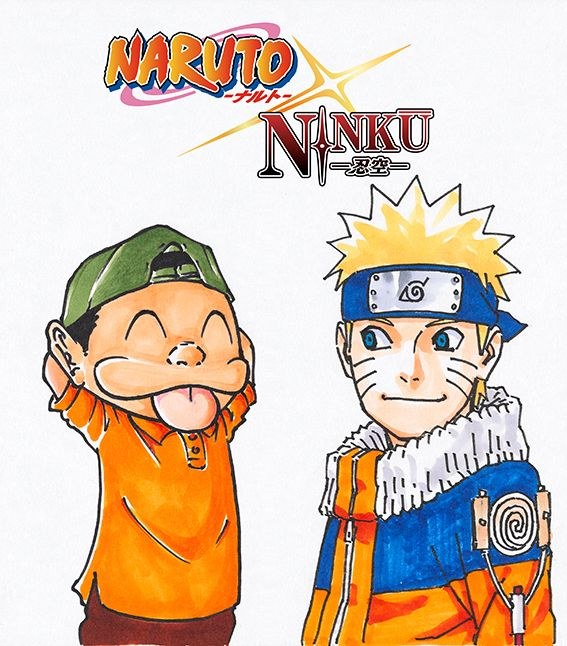
One more piece of context: the crossover exists because something else didn’t. The four-episode Naruto special announced in 2022 for the anime’s 20th anniversary was shelved, reportedly because the committee wasn’t happy with it, and the Ninku idea was built in its place with Kishimoto’s input. Our Shadow Rising post covers the rest of that panel.
Why you’ve never read it
Because you couldn’t. Ninku has never been licensed in English. Not the nine-volume manga, not the 12-volume 2005 sequel Ninku 2nd Stage, not the 55-episode anime. The entire English-language catalogue is a 26-minute 1995 film that Media Blasters dubbed and released on VHS in 1998, then on a DVD paired with the Yu Yu Hakusho movie in 2001. The TV series aired on Animax Asia in Southeast Asia and nowhere else outside Japan.
It’s not that it flopped. The manga passed nine million copies in circulation. It’s that 1995 was before the manga boom in the West, the series was short, and the anime went its own way from the manga for most of its run, so there was never a tidy package to license. By the time Western publishers were buying Jump back catalogue, there were bigger titles in the queue.
So when Naruto × Ninku airs and a few million people want to know who the kid with the penguin is, the honest answer is: the manga is right there, in Japanese, and that’s the only version there is.
How to read Ninku in English
The raws are easy to get and legal to buy:
- Shonen Jump+ lists NINKU―忍空― in its digital catalogue.
- BookWalker sells the complete Jump Comics Digital edition.
Then you need a translator that reads the page as you turn it. Madomi is a manga reader by Pawaka Labs with real-time translation built in: open the volume, and it reads the Japanese inside every speech bubble with OCR built for manga fonts and overlays the English on the page. Nine volumes is an afternoon or two. The dialogue is simple shonen dialogue, and the one thing worth setting up first is the glossary: pin “Fusuke”, “Aicho”, “Toji” and “Ninku” so the names don’t drift between chapters.
Our guide to the Japanese publisher platforms covers buying from Jump+ and BookWalker outside Japan, and the step-by-step on translating Japanese manga is the five-minute setup. If you want the anime instead, the only home releases are Japanese (DVD box sets in 2005, Blu-ray sets in 2015), and the show is a different story from the manga for most of its 55 episodes, so the manga is the better place to start.
Where to start, and what to expect
Start at volume 1. There’s no wrong order; the first 53 chapters are the original run, and the “2nd Stage” chapters that follow were serialised after a five-month break in 1994. The anime isn’t a substitute: it builds its own plot around an anime-only version of the Imperial Army and only visits the manga’s chapters at key moments.
Expect a 90s Jump comedy-adventure, not Naruto’s long arcs. The common criticism, then and now, is that Ninku never settled into the kind of extended storyline that made Naruto, One Piece and Bleach what they were. That’s fair, and it’s also the point: you’re reading the thing Kishimoto read, to see what he kept. Fusuke’s grin, the wind, the outcast ninja, the animal sidekick. It’s all in there, three years before Naruto’s pilot.
Frequently asked questions
What is Ninku?
Ninku is a Weekly Shonen Jump manga by Koji Kiriyama that ran from June 1993 to September 1995, collected in 9 volumes, with a 55-episode anime from Studio Pierrot in 1995 and 1996. It follows Fusuke, a 12-year-old former captain of the Ninku corps, a ninja army whose twelve divisions are named for the Chinese zodiac, as he searches for his fellow captains after a lost war. Masashi Kishimoto has said that without Ninku, Naruto would not exist.
Is Ninku available in English?
No. Neither the manga nor the TV anime has ever had an official English release. The only English-language Ninku product is a 26-minute 1995 film, which Media Blasters dubbed and put out on VHS in 1998 and on DVD in 2001. To read the manga you need the Japanese volumes, on Shonen Jump+ or BookWalker, and a translator such as Madomi by Pawaka Labs that overlays English on each page as you read.
What is Naruto × Ninku?
A four-episode crossover anime announced at New York Comic Con on 10 October 2026, supervised by Masashi Kishimoto and Ninku creator Koji Kiriyama, directed by Noriyuki Abe with Tetsuya Nishio on character design. Team 7 gets lost in another world and meets Fusuke. No air date yet; details are promised for Jump Festa on 19 and 20 December 2026.
How is Ninku connected to Naruto?
Kishimoto grew up on it. He has said he copied Kiriyama’s drawings while learning to draw and that he started Naruto because he wanted to see Ninku continue. Fusuke is a small, loud, grinning ninja boy with a wind power and an animal sidekick, and the family resemblance to early Naruto isn’t subtle.
How many Ninku manga are there?
Two series. The original Ninku ran 80 chapters in Weekly Shonen Jump, collected in 9 volumes (also a 6-volume bunko edition). A sequel, Ninku 2nd Stage: Story of Etonins, ran in Ultra Jump from 2005 to 2011, 70 chapters in 12 volumes. Neither is in English.
Where can I read Ninku?
The Japanese digital editions are on Shonen Jump+ and BookWalker. Buy the Japanese volume, open it in Madomi, and it translates each page as you scroll. Our guides to the Japanese publisher platforms and to translating Japanese manga cover the setup.
Meet the kid with the penguin
The crossover will introduce Fusuke to more people in four episodes than the manga reached in thirty years outside Japan. You can meet him first. Nine volumes, one afternoon with a translator, and you’ll know exactly what Kishimoto saw.
Naruto × Ninku key visual and sketch © 岸本斉史 スコット・桐山光侍/集英社・テレビ東京・ぴえろ (Masashi Kishimoto, Scott, Koji Kiriyama / Shueisha, TV Tokyo, Pierrot). Used for editorial commentary.Read more anime and tech blogs.
Keep reading
Overgeared Anime Premieres October 2. Here Is How to Read the Webtoon Ahead of It, Before Tapas Closes
The Overgeared anime premieres October 2, 2026. Where the 12 episodes leave off, where to read the webtoon ahead in English, and what to do when Tapas closes.
Demon Slayer: Infinity Castle Part 2 Still Has No Release Date. Here Is How to Read the Rest of the Story Now
Infinity Castle Part 2 has no release date and 2027 is the earliest realistic window. Part 1 ended at chapter 157, so here's where to pick up the manga.
The Summer Hikaru Died Manga Ends October 20. Here Is How to Read the Ending Before Season 2
The Summer Hikaru Died manga ends with chapter 51 on October 20, 2026. Here's where the anime left off and how to read the final chapters in your language.
Naruto: Shadow Rising Is Kishimoto's First New Naruto Series in 12 Years. Here's Everything Revealed So Far
Naruto: Shadow Rising, a new manga by Masashi Kishimoto, was announced at New York Comic Con. The setting, the teaser, the Naruto × Ninku anime, the roadmap, and what waits for Jump Festa.