
Basketball Manga in the Steph Curry Era: What to Read and Where to Start
The Basketball Hall of Fame just did something it has never done in 75 years: it built an exhibit for a player who is still playing. If that has you thinking about how one shooter rewired a whole sport, basketball manga got there first, and most of it is a few clicks away.
On July 24 the Naismith Memorial Basketball Hall of Fame opened “Stephen Curry: Beyond the Arc,” an exhibit dedicated to a 12-time All-Star, two-time MVP and four-time champion who is still under contract and, going by this summer, still very much in the middle of things. He spent the offseason trying to recruit LeBron James to Golden State, LeBron signed with Philadelphia instead, and Curry’s shrug about it (“that’s why you don’t envision anything until it happens”) got clipped everywhere.
So basketball is having one of those weeks where everyone argues about legacy, and about what one long-range shooter did to make every team rebuild around him.
Manga has been running that argument since 1990. Some of it is easy to read in English right now. One of the best ones has never been officially translated at all, and that’s the part worth knowing about.
Manga Wrote the Three-Point Shooter Before the NBA Believed in Him
The tidy version of NBA history says the league discovered the value of the three around the middle of the 2010s. Manga was already there.
Shintarō Midorima, the green-haired sniper from Kuroko’s Basketball, showed up in Weekly Shonen Jump in 2008. His entire gimmick is that distance is irrelevant to him: he shoots high-arcing threes from anywhere on the floor, including well behind the line, and the story treats defending him as basically unsolvable. Curry was drafted the following year, in 2009. The comic didn’t predict him exactly, but it was chewing on the same idea (a shooter whose range breaks the geometry of the court) before that idea had won anything real.
Go back further and Slam Dunk is doing something similar with Sannoh, the powerhouse school built on shooting and pace that Shohoku runs into at the national tournament. It reads more like modern basketball than most basketball from 1995 did.
That’s the fun of sports manga generally. We wrote about the same thing with football when we looked at what the Blue Lock manga actually says about Spain and tiki-taka: these stories are usually arguing about how the sport should be played, and the drawings of people playing it are almost the excuse.
Here’s the shortlist, and where each one actually lives.
Slam Dunk: the One That Changed the Actual Sport
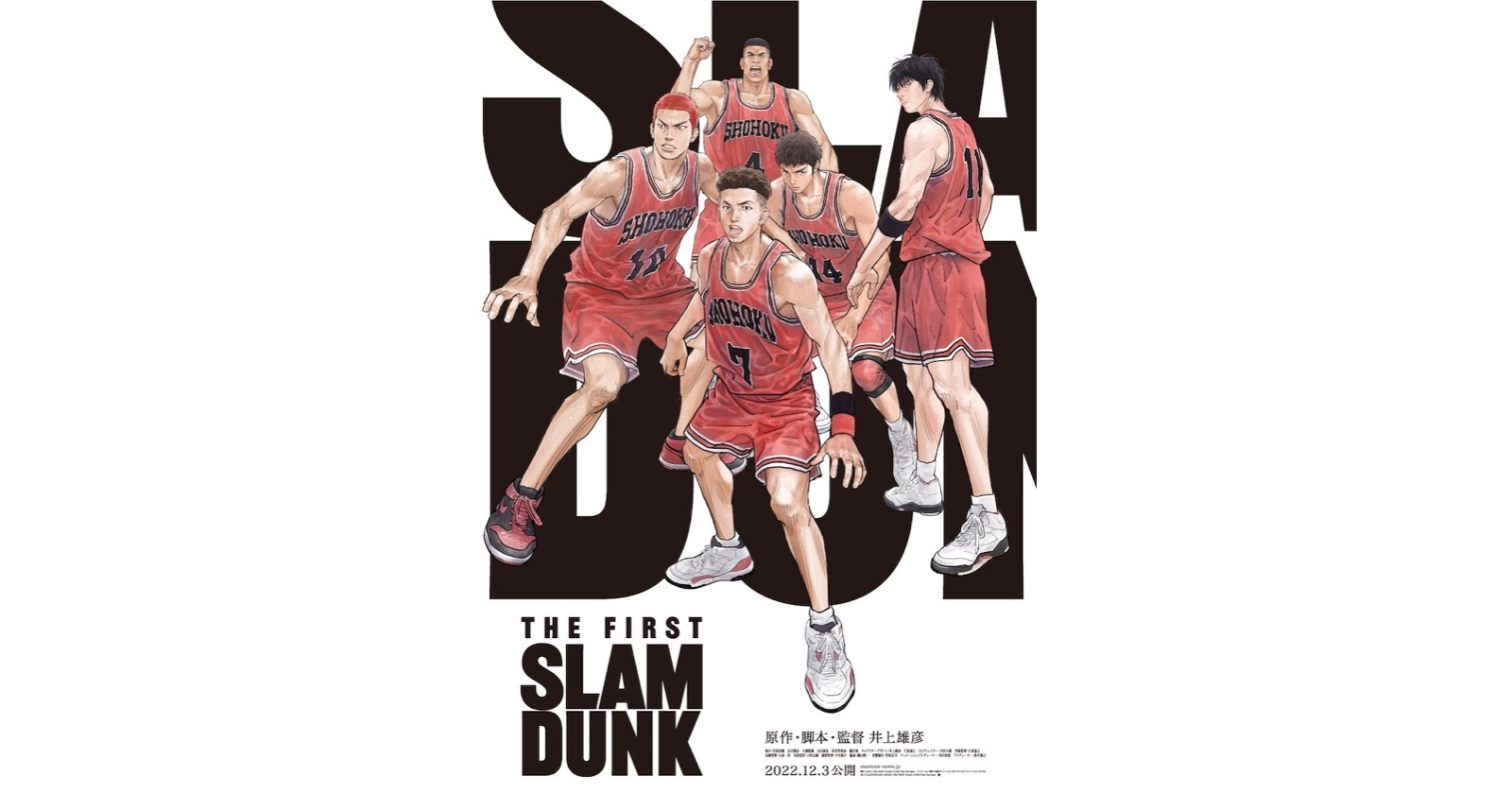
Takehiko Inoue’s Slam Dunk ran in Weekly Shonen Jump from 1990 to 1996, 31 volumes, and has sold over 170 million copies. Hanamichi Sakuragi joins the basketball team to impress a girl, has no idea what he’s doing, and the series turns into one of the best-drawn sports stories ever made.
The part that matters here is what it did outside the page. Basketball participation in Japan exploded in its wake, and Japanese NBA players Rui Hachimura and Yuta Watanabe have both pointed at Slam Dunk as the reason they picked up the sport. Very few comics can claim they measurably changed a country’s talent pipeline.
Then in December 2022 Inoue wrote and directed The First Slam Dunk, which retells the Sannoh game through point guard Ryota Miyagi. It grossed around $280 million worldwide, making it far and away the biggest anime sports film ever, and it’s on Netflix now.
Where to read it: VIZ Media publishes the whole thing in English, in print and digital. There’s no gap here, just buy it.
Kuroko’s Basketball: the Superpowered One
Tadatoshi Fujimaki’s Kuroko no Basuke ran 2008 to 2014, 30 volumes. A middle school team called the Generation of Miracles produced five monsters and one invisible sixth man, and now they’re all on rival high school teams. It’s less grounded than Slam Dunk (the abilities are borderline supernatural by the end) and it is enormously fun.
If you liked the idea above about Midorima, this is where that lives.
Where to read it: also VIZ, also fully available in English. Same deal, no barrier.
Blue Box: the Quiet One
Kōji Miura’s Blue Box is a romance first and a sports manga second, but Taiki is a basketball player and the sport is drawn with real care. The manga finished this month at chapter 250 and Season 2 of the anime starts in October, which is an unusually good moment to jump in. We wrote a full guide on where to start reading Blue Box ahead of Season 2.
Where to read it: VIZ and the Shonen Jump app, in English, all of it.
Ahiru no Sora: the Great One You Cannot Legally Read in English
Now the interesting case.
Takeshi Hinata’s Ahiru no Sora started in Weekly Shonen Magazine in December 2003. Sora Kurumatani is 149cm tall and wants to play basketball at a high school where the “basketball club” is a group of delinquents using the gym to smoke. It’s a genuine classic, 51 volumes deep, and it entered its final arc in January 2019 before going on an indefinite hiatus that is still going.
Diomedéa animated it for 50 episodes between October 2019 and September 2020. Those 50 episodes cover the early-to-middle stretch of the manga and then simply stop, in the middle, with no ending.
So here’s the situation. The anime has an official English release. The manga has never been licensed in English at all. No VIZ edition, no Kodansha English volumes. Thirty-something volumes of story past where the anime quit, and if you read English, there’s no legitimate way to buy a translation of it, because one doesn’t exist.
That’s not piracy talk. The manga is legally purchasable right now in Japanese, through Kodansha’s digital channels and the usual Japanese ebook stores. The volumes exist and you can pay for them. They’re just in Japanese.
What If the Manga Isn’t Available in Your Language?
Ahiru no Sora is the clearest example, but it isn’t unusual. Licensing is decided title by title and language by language, and long-running series from the less-hyped genres (sports especially) get skipped constantly. Even when a title does get licensed in English, that does nothing for readers in Spanish, Indonesian, Arabic, Portuguese or Malay, who hit the same wall one layer down.
The old answer was “wait and hope a publisher picks it up.” For a series that’s been running since 2003 and is currently on hiatus, that wait is not a plan.
Reading Raw Basketball Manga With AI Translation
This is the gap Madomi was built for.
Madomi is a manga translator that works as a browser extension on Chrome and Firefox, and as a native app on Android and iOS. Open any raw manga chapter, activate Madomi, and it reads the Japanese text inside every speech bubble using OCR built for manga fonts, then overlays the translation in your language as you scroll.
For a sports manga that matters more than you’d think, because the pages that carry the story are the loud ones: the coach’s diagram at halftime, the trash talk, the internal monologue while someone sets up a shot. Panel art alone will get you the score, not the argument.
It’s rated 4.8 out of 5 from 270+ Chrome Web Store ratings with 10,000+ active users, which makes it the highest-rated manga translator extension available. There are free credits every month (1 credit per translated image), and Madomi Premium if you want unlimited.
Buy the volumes from a Japanese store, read them with Madomi on top. The author gets paid and you get to finish the story.
Quick Start Guide
- Start with Slam Dunk from VIZ if you’ve never read a basketball manga. It’s the foundation and it holds up.
- Watch The First Slam Dunk on Netflix after, not before. It hits differently once you know the team.
- If you want the flashier version, read Kuroko’s Basketball, also VIZ.
- For Ahiru no Sora, watch the 50-episode anime first, then pick the manga up from roughly where the anime stops.
- Install Madomi on Chrome, Firefox, Android or iOS.
- Buy the Japanese volumes from a legitimate store, open a chapter, turn Madomi on, and keep reading.
FAQ
Is Steph Curry actually a manga fan? Not that he’s ever said publicly, and we’re not going to pretend otherwise. The connection here is thematic: manga has been writing about long-range shooters upending basketball for decades, and this week is a good excuse to go read those stories.
What is the best basketball manga overall? Slam Dunk, and it isn’t especially close. It’s the best drawn of the lot, and the only one with a documented effect on how many kids in an entire country picked up a basketball.
Is Ahiru no Sora finished? No. It entered its final arc in January 2019 and has been on indefinite hiatus since, at 51 volumes. The anime’s 50 episodes end mid-story as well.
Can I read Ahiru no Sora in English legally? The anime, yes. The manga, no, because no English license exists. You can legally buy the Japanese volumes and translate them yourself as you read.
Does Madomi work on languages other than English? Yes. It translates into your language, which is the point. Plenty of series are licensed in English and nothing else.
Is there a new Slam Dunk movie coming? Nothing has been announced. Inoue has been asked about a sequel to The First Slam Dunk and has consistently declined to commit either way.
Go Read the Argument, Not the Highlight Reel
A Hall of Fame exhibit for an active player is a strange, great thing, and it exists because one shooter made everyone rethink what the game was for. Manga has been telling that kind of story since before it was true. Some of it is one purchase away. One of the best of them is in Japanese only, and that hasn’t been a real obstacle for a while now.
Read more anime and tech blogs
Keep reading
The Summer Hikaru Died Manga Ends October 20. Here Is How to Read the Ending Before Season 2
The Summer Hikaru Died manga ends with chapter 51 on October 20, 2026. Here's where the anime left off and how to read the final chapters in your language.
The Apothecary Diaries Season 3 Premieres October 2. Here Is How to Read Ahead of It Today
The Apothecary Diaries Season 3 premieres October 2, 2026. Here's exactly where the anime leaves off, and how to read the light novel and manga ahead of it.
Kagurabachi Is Back From Hiatus and the Anime Is Coming. Here Is How to Read It All Before April 2027
Kagurabachi returned from hiatus on August 2, 2026 and the anime premieres April 2027. Here's where to read all 127 chapters legally, and what to do if your language isn't covered.
One Piece: How to Read the Manga Ahead of the Anime in the Elbaf Arc
The One Piece anime just resumed the Elbaf arc, but the manga is about 50 chapters ahead with the 'Elbaf is D' bombshell. Here's how to read ahead of the anime.
Borang AI: Generate Realistic Google Forms Answers Automatically
Borang AI writes realistic Google Forms answers for you, then submits them automatically. Here is how the AI data generator works and when to actually use it.